
Monsoon-Proof Your Lights: How to Protect Every Fixture From Humidity, Corrosion & Damp
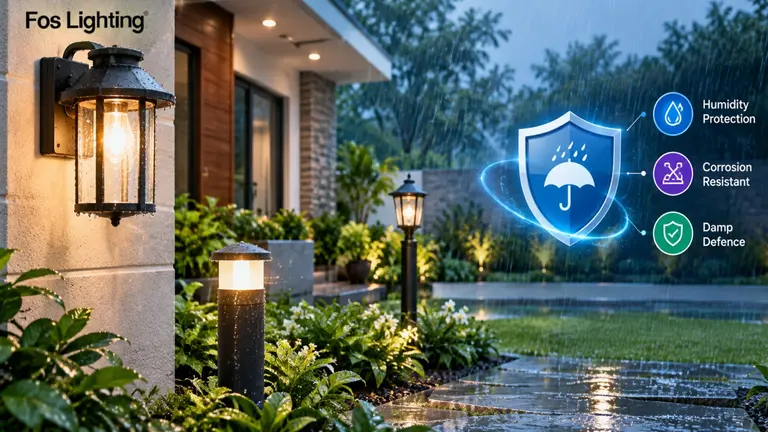
The monsoon brings cooler weather, fresh air and green surroundings. It's wonderful for nature — and hard on your lighting. Moisture in the air, water leaks and constant humidity can quietly wear down both indoor and outdoor fixtures over a season.
That's where monsoon lighting protection matters. A little care extends the life and efficiency of your fixtures and cuts down on repair and replacement costs. At ++Fos Lighting++, we build fixtures to last the year round — but whatever brand you own, a pendant, ceiling, wall or outdoor light all benefit from a few simple precautions before and during the rains. If you're buying new outdoor lighting for the season, our companion ++monsoon-ready outdoor lighting guide++ covers gate, balcony and garden choices; this guide is about protecting what you already have.
Why Does the Monsoon Affect Light Fixtures?
Many people assume rain only affects outdoor lights. In reality, indoor fixtures suffer too when humidity rises. Moisture in the air seeps into small gaps around a fixture and, over time, causes rust, discolouration, loose electrical parts and weaker light output.
Common causes:
• Heavy indoor humidity
• Water leaks from ceilings or walls
• Poor ventilation
• Moisture collecting around electrical fittings
• Rainwater reaching outdoor fixtures
Left unchecked, these problems get worse every year.
Signs Humidity Is Damaging Your Lights
Your lights usually warn you before major damage sets in. Watch for:
• Rust around screws or metal parts
• Green or white marks on brass or copper
• Paint starting to peel
• Flickering
• Water droplets inside glass covers
• A musty smell near ceiling fixtures
• Dimming that a new bulb doesn't fix
These are the humidity-damage signs homeowners see every rainy season. Catching them early is far easier than replacing a whole fixture.
Choose Materials That Handle Moisture Better
Not every fixture reacts the same way to humid weather — the material makes a big difference to how long it lasts.
| | | | | ------------------------- | ----------------------------------- | ----------------------------- | | Material / Finish | Performance in Monsoon | Best Use | | Brass with natural patina | Excellent moisture resistance | Indoor decorative lighting | | Powder-coated aluminium | Resists rust and fading | Indoor & outdoor lighting | | Stainless steel | Strong against corrosion | Outdoor walls and gardens | | Painted steel | May rust over time | Dry indoor areas only | | Plastic fixtures | Moisture-resistant but less premium | Utility spaces |
Choosing corrosion-resistant lights is one of the smartest long-term investments, especially in cities where humidity stays high for months. It's also why investing in well-made fixtures pays off — a point we make in our guide on ++why artisan and heritage lighting outlasts fast-fashion trends++.
Why Brass Is Still One of the Best Choices
There's a reason so many luxury collections feature brass. Rather than rusting, brass develops a patina over time — a protective layer that also adds beauty. Where cheaper metals wear away, brass ages gracefully, which makes it ideal for ++dining pendants++, ++wall sconces++ and decorative ++chandeliers++. With basic cleaning, brass fixtures stay attractive for years. Our ++guide to brass accents and the Neo-Deco revival++ explores the finish in more detail.
Powder-Coated Finishes Offer Extra Protection
If you're buying before the rains, look for powder-coated finishes. Unlike ordinary paint, powder coating forms a tougher protective layer that reduces rust, scratches, moisture damage and colour fading — a sensible choice for balcony, covered patio, kitchen and bathroom fixtures. Today's decorative lights can be both beautiful and tough when powder-coated.
Shop weather-ready outdoor lighting ++➜ Shop Outdoor Lights++
The Monsoon Light-Care Checklist
The easiest way to avoid expensive repairs is regular care through the season. Before the rains begin, work through this once:
-
Clean every light fixture thoroughly
-
Check for loose screws and fittings
-
Replace cracked glass covers
-
Inspect outdoor wiring
-
Seal gaps where moisture can enter
-
Remove dust from ceiling lights
-
Test outdoor fixtures before heavy rain arrives
-
Replace damaged rubber seals
-
Turn off the power before inspecting any fitting
SAFETY FIRST Always switch off the power at the board before you inspect, clean or tighten any fitting — indoors or out. It takes seconds and it's non-negotiable during a damp season.
Protect Every Room From Moisture
Different parts of the home face different moisture levels. Knowing where your lights are most at risk helps you protect them.
Living Room
Usually the driest room, but high humidity can still dull decorative lighting as dust and moisture settle on chandeliers and pendants. Clean them regularly with a soft dry cloth, and never wet the fixture while cleaning.
Kitchen
Daily cooking adds steam, so grease and humidity build up on ceiling lights and fixtures near the stove. Clean more often and keep the exhaust fan working to cut moisture.
Bathroom
Bathrooms have the highest humidity in the house. Choose fixtures accurately and make sure the room is well ventilated — good airflow reduces moisture around electrical fittings. See our ++bath lighting range++ for suitably rated options.
Balcony & Outdoor
Exterior lights face rain, wind and temperature swings directly. Even a properly rated outdoor fitting should be inspected during the season — clear away dirt and leaves that collect around it. Corrosion-resistant ++outdoor lights++ reduce long-term damage and keep exterior spaces looking their best. For festive entrances, our ++outdoor wall and gate lighting guide++ is a useful companion.
Protect your entrance this season ++➜ Shop Outdoor Lights++
Simple Cleaning Tips That Make a Big Difference
Regular cleaning is one of the easiest ways to extend a fixture's life:
• Always switch off the power first
• Use a soft microfibre cloth to remove dust
• Dry the fixture completely afterwards
• Never spray water directly onto electrical fittings
• Clean glass shades with a mild cleaner, not harsh chemicals
• Check metal parts for early rust or discolouration
• Clear insects and debris from outdoor fixtures after heavy rain
Common Mistakes to Avoid
• Ignoring small rust spots
• Using indoor lights outside
• Leaving water around outdoor electrical fittings
• Cleaning powered fixtures without switching off electricity
• Waiting too long to replace damaged seals or loose wiring
How to Create a Damp-Proof Lighting Home
A few smart habits protect both your lights and your wider electrical system:
• Improve ventilation in bathrooms and kitchens
• Fix roof or wall leaks as soon as they appear
• Use exhaust fans to lower indoor humidity
• Open windows whenever the weather allows
• Install moisture-resistant fixtures in humid areas
• Choose high-quality finishes that handle changing weather
• Inspect outdoor wiring before every rainy season
A damp-proof lighting home isn't about spending more — it's about choosing the right products and keeping up simple maintenance.
When Should You Replace a Light Fixture?
Sometimes cleaning is enough; sometimes replacing is the safer choice. Consider replacing a fixture if you see:
• Heavy rust covering the fixture
• Water trapped inside the housing
• Frequent flickering after a bulb change
• Broken electrical connections
• Cracked or damaged protective covers
• Corrosion spreading across multiple metal parts
A new fixture made with better materials will almost always perform better through future monsoons.
Lighting built to last every season
Powder-coated & corrosion-resistant finishes · handcrafted in Chandni Chowk · shipped across India
++➜ Shop Outdoor Lights++ ++➜ Talk to a Lighting Expert++
Frequently Asked Questions
How do I protect my lights during the monsoon?
Clean and inspect every fixture before the rains, seal gaps where moisture can enter, replace worn rubber seals properly. Switch off the power before any inspection. Regular light dusting through the season does most of the work.
Can indoor lights get damaged by humidity?
Yes. High indoor humidity seeps into small gaps and can cause rust, discolouration, flickering and dimming over time — especially in kitchens and bathrooms. Good ventilation and regular cleaning prevent most of it.
Which material lasts longest in humid weather?
Brass with a natural patina and powder-coated aluminium perform best. Stainless steel is strong outdoors. Avoid painted steel in damp areas, as it tends to rust. Brass, in particular, ages gracefully rather than corroding.
When should I replace a light instead of cleaning it?
Replace a fixture if you see heavy rust, water trapped inside the housing, broken electrical connections, cracked covers, or corrosion spreading across several parts. At that stage a new, better-built fixture is the safer choice.